Mold Inspection in Seattle, WA
A Seattle mold inspection is booked with one call to (856) 595-8837, and inspection-only calls are accepted. Once a support manager confirms the time, a local specialist from our network contacts you quickly, sometimes the same day, and gives the estimate on that call. The inspection follows dampness from the crawl space to the attic and bathrooms, adding lab samples only for hidden growth or clearance.
- One call, no forms to fill out
- Support manager available 24/7 to confirm your booking time
- A specialist contacts you quickly, sometimes the same day
- Free estimate and inspection, given on the call
- Inspection-only calls are accepted
- Insured and certified network technicians
- Help with insurance claims
- Independent clearance testing available
Tell us what you notice · a booking time is confirmed · the inspection estimate comes on the specialist's call
No name, phone or email needed. We count anonymous answers, never contact details, to improve this page.
On the call, say what you smell or see, where in the house, and since when.
Mold Remediation Co. is a referral service. We connect you by phone with independent local mold inspection and remediation companies, and their technicians perform the work. We are not a contractor.
Quick recap
- Who it suits: Seattle owners with a musty floor, stained attic sheathing, a damp bathroom ceiling, or a finished job that needs clearance.
- What gets checked: crawl space, attic, bathrooms, ducts and exterior walls and windows.
- Lab samples: taken to locate hidden growth or to prove clearance, not to name a species.
- Booking: one call to (856) 595-8837; inspection-only calls are accepted.
- Coverage: 35 Seattle ZIP codes plus Bellevue, Kirkland, Redmond, Bothell and 9 more nearby towns.
Mold inspection or mold test: which does a Seattle home need?
A Seattle home needs the mold inspection, because it finds growth, measures wet materials and traces the moisture source. A mold test only reports what a lab finds in a sample, and EPA calls sampling unnecessary in most cases with visible growth.
| Point of comparison | Inspection | Mold test |
|---|---|---|
| Tools | Flashlight, moisture meter, humidity meter, odor tracing | Air pump with cassette, swab or tape lift, laboratory |
| Covers | Crawl space, attic, bathrooms, walls, ducts | Only the air or the spot sampled |
| Finds the moisture source | Yes | No |
| Measures the job | Yes, in square feet per area | No |
| Compared against | Dry readings for each material | Outdoor air sampled the same day; no federal airborne limit exists |
| Typical use in Seattle | Musty crawl space, stained sheathing, damp bathroom ceiling | Odor with no visible source; clearance after removal |
The wider comparison, including home kits, is in our guide on inspection vs testing for mold.
How does booking a Seattle mold inspection by phone work?
Booking a Seattle mold inspection takes one call to (856) 595-8837. The support manager asks what you see or smell and where, then confirms a booking time. A local specialist contacts you quickly, sometimes the same day, and gives the inspection estimate.
- Tell the support manager what you see or smell, and where.
- Confirm the booking time offered; inspection-only visits are accepted.
- Get the inspection estimate on the specialist's call.
Make the visit faster
- Clear stored items away from the crawl space hatch and the attic access.
- Leave stains untouched; EPA advises against painting or caulking over moldy surfaces.
- Keep wallpaper or paneling in place, since EPA warns that pulling it over hidden growth releases a burst of spores.
- List the dates of roof leaks, plumbing repairs, standing water under the house and any earlier mold work.
- Say whether the visit is a first inspection or a clearance check.
What does a Seattle mold inspector check?
A Seattle mold inspector checks the crawl space first, then the attic, bathrooms, ducts and exterior walls. In each area the inspector records visible growth, moisture content, humidity and odor, and traces every wet reading back to its source.
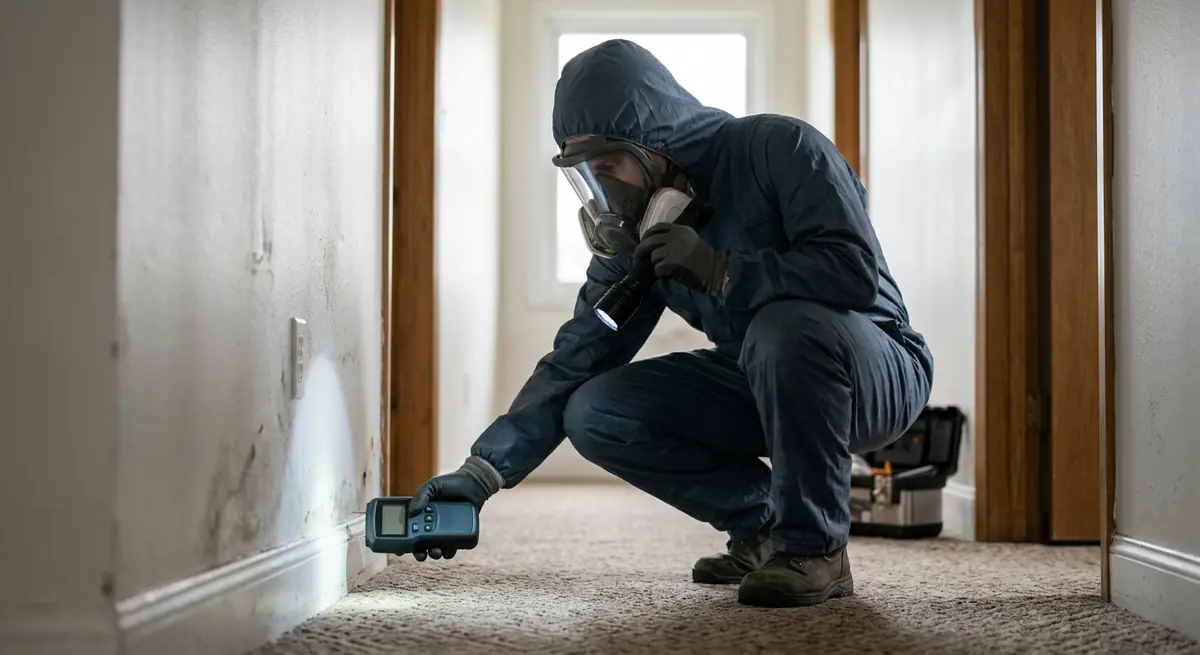
| Area | What gets checked | Why it matters in Seattle |
|---|---|---|
| Crawl space | Joists, the underside of the subfloor, batt insulation, the ground cover, standing water, pipes and ducts | Seattle Boeing Field averages 36.5 inches of precipitation a year, and the soil under a raised floor dries slowly |
| Attic | Roof sheathing, rafters, insulation, roof penetrations, bath fan and dryer duct ends | EPA links roof-material mold to roof leaks and insufficient insulation |
| Bathrooms | Ceiling paint, outside-wall corners, tile edges, the exhaust fan | EPA advises running the fan or opening the window when showering |
| Ducts and furnace | Air handler, supply and return runs, registers | EPA lists ductwork as a hidden-mold location |
| Exterior walls and windows | Sills, frames, wall surfaces behind furniture | EPA names walls behind furniture, where condensation forms, as a hidden-mold location |
Meters before demolition
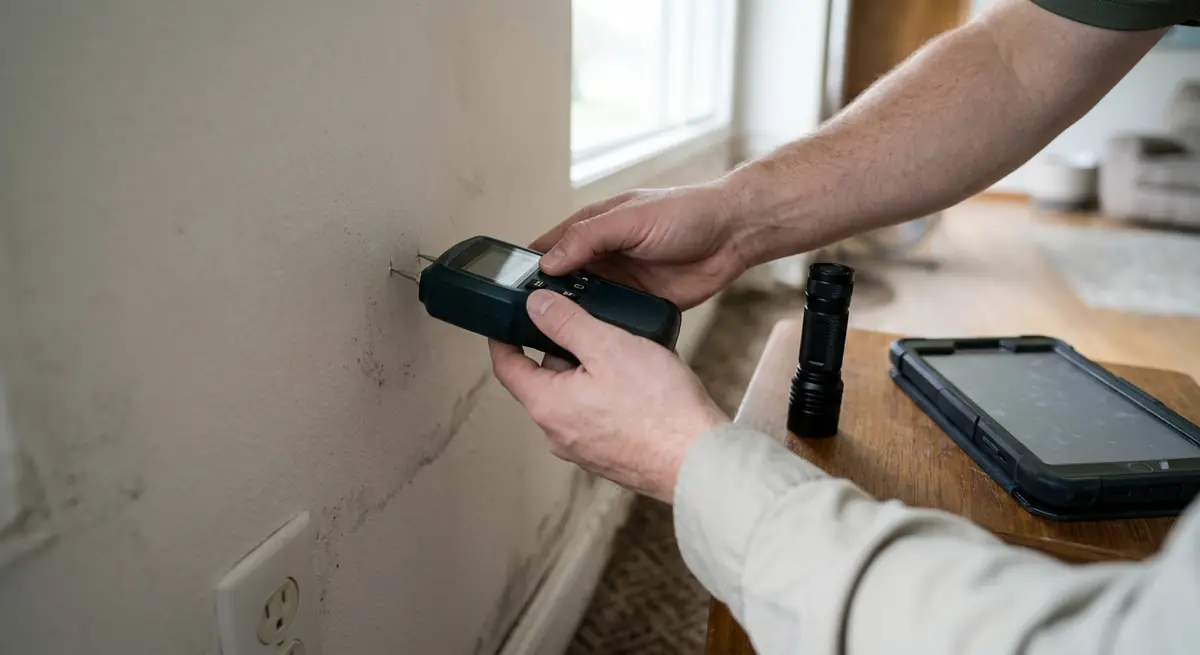
A moisture meter reads the water content of wood and drywall, and a humidity meter reads the air; EPA lists both as tools for investigating mold. The Seattle inspector reads joists and subfloor across the whole crawl space before opening anything, so the removal area matches the wet area.
Written findings
Ask for a report listing each affected area and its size in square feet, the moisture readings, the moisture source and any lab results. A remediation company prices from that report, and the clearance check is compared with it.
When is mold testing worth it in Seattle?
Mold testing is worth it in Seattle in 2 situations: a musty smell with no visible growth, where samples help locate the hidden source, and a finished remediation job, where samples help confirm cleanup. Visible growth calls for removal, not a lab report.
Testing adds little when
- The mold is visible: EPA calls sampling unnecessary in most of these cases.
- You want the species: CDC does not recommend mold testing and sees no need to name the type.
- You want a safe number: EPA has set no federal limit for airborne mold or spores.
- You want a health answer: CDC states that sampling cannot show whether anyone will get sick.
Reading air and surface samples
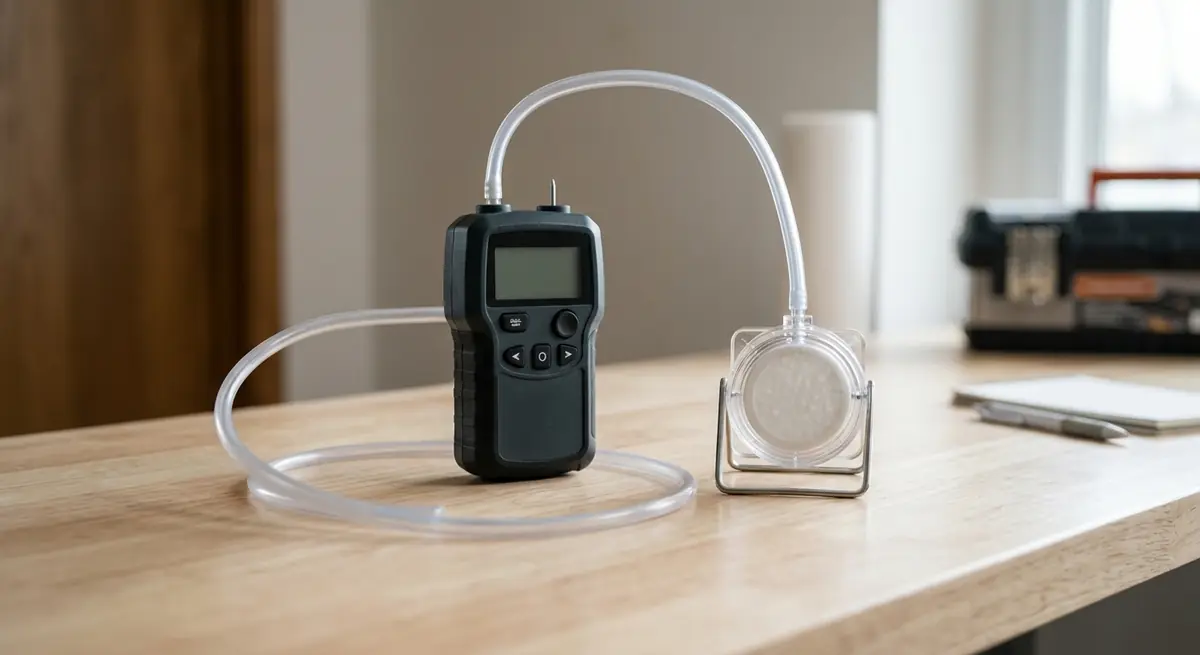
An air sample is meaningful only beside an outdoor sample taken the same day: EPA's post-cleanup benchmark is indoor mold types and levels similar to the outside air. A surface sample by swab or tape lift shows what grows on one spot, and EPA cites surface sampling as a way to confirm an area was adequately cleaned. EPA recommends that sampling be designed and interpreted by professionals experienced in mold sampling protocols.
What do Washington rules say about mold inspectors?
Washington's Department of Health states there are no specific certification requirements for mold or water damage restoration in the state, so homeowners should verify a contractor's L&I registration, insurance and references. That leaves inspector selection to your own questions.
L&I is the Washington State Department of Labor & Industries. Before a Seattle inspector visits, ask 3 questions:
- Background: which mold training or certification the inspector holds, and who issued it.
- Laboratory: which lab reads any samples, and whether an outdoor comparison sample is included.
- Independence: whether the inspecting firm also removes mold, and who checks the work afterward.
How does clearance testing confirm a Seattle mold job passed?
Clearance testing confirms a Seattle mold job passed when the moisture source is fixed, no visible mold, mold-damaged material or moldy odor remains, and any samples show indoor mold types and levels close to the outdoor air.
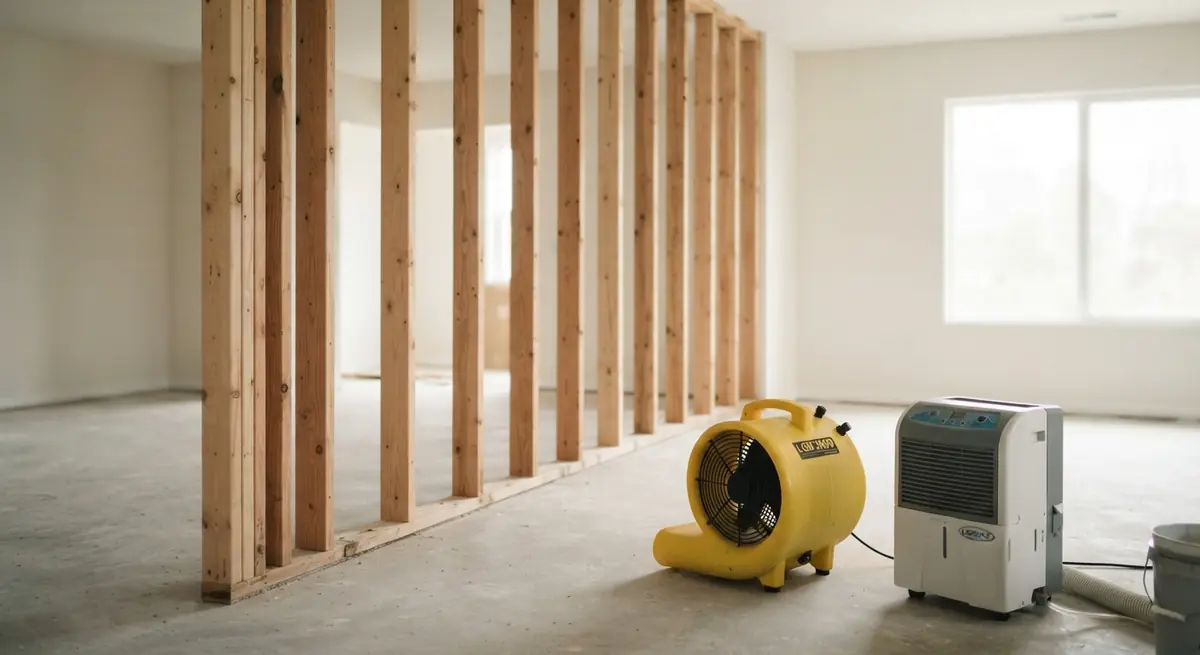
EPA adds one more sign, a space people reoccupy without health complaints, and treats the final decision as a judgment call. Washington sets no specific certification requirement for this work, so the pass criteria belong in the written contract before removal begins.
Pick an independent checker
A firm that had no part in the removal gives the most credible clearance. Book it while containment is still in place and before insulation or drywall returns, so a failed area is cleaned again inside the same enclosure. Independent clearance testing is available through our network.
Re-cleaning after a fail
A failed result names the area with remaining growth, a high moisture reading or an elevated sample. That area is cleaned again and rechecked, and the job closes when the written result passes.
How much does a Seattle mold inspection cost?
A Seattle mold inspection booked through our network costs nothing, and neither does the estimate. Laboratory samples and a later clearance visit are charged on their own, as the specialist explains on the call. We found no verified Seattle fee figure to publish.
What raises sample and clearance charges
- Number of samples: every air or surface sample is its own lab charge, and air tests add an outdoor comparison.
- Hatch access: crawl space and attic sampling takes longer than a room at floor level.
- Clearance: the check after removal is a separate visit from the first inspection.
Inspection and removal are priced apart. Square footage, containment, insulation removal and the moisture fix set the mold removal cost in Seattle, and that page lists the national price figures.
What comes after a Seattle mold inspection finds growth?
After a Seattle inspection finds growth, the findings set the removal scope: square feet per area, containment level, materials to remove or clean, and the moisture fix. EPA places patches under about 10 square feet within homeowner cleanup.
Larger areas move to removal, and EPA's containment bands of 10 to 100 square feet and over 100 square feet decide how the zone is sealed. The steps, Seattle moisture drivers and every covered ZIP code are on our page about mold remediation in Seattle. One call to (856) 595-8837 books the inspection and the removal estimate together.
Seattle mold inspection FAQ
Does the inspector go into the crawl space?
Yes. The inspector enters the crawl space, reads moisture in the joists and subfloor, photographs any growth, and checks the ground cover, pipes and ducts. Clear the path to the hatch before the visit so the check starts right away.
Is a musty smell in a Seattle house a sign of mold?
It is a common one. EPA treats a moldy odor with no visible source as a reason to suspect hidden growth. An inspection traces the smell to a crawl space, attic, wall or duct, and samples confirm growth that stays out of sight.
Can I book only an inspection in Seattle?
Yes. Inspection-only calls are accepted, and both the inspection and the estimate are free. Decide on removal later, once you have the written findings, the moisture readings, any lab results and the specialist's estimate for the work.
When should the clearance test happen after removal?
Before containment comes down and before insulation or drywall goes back. Testing at that point lets any failed area be cleaned again inside the same enclosure, and it keeps rebuild work from covering growth that was missed.
Are hardware store mold test kits reliable?
Not as a substitute for an inspection. A kit collects spores present in every home, and CDC notes that no accepted standard sets an acceptable indoor level. A kit cannot find the moisture source or measure how much material is affected.
Musty crawl space, stained attic or a job to clear in Seattle? Call (856) 595-8837. A support manager confirms your booking time, and a local specialist gives the inspection estimate on the call.
Call (856) 595-8837