Mold Inspection in Miami, FL
Book a mold inspection in Miami, FL by calling (856) 595-8837. A support manager confirms a booking time, and a specialist from our network contacts you quickly, sometimes the same day, with the estimate. The visit traces humidity, air-conditioning and flood moisture through walls, closets and ducts. Florida licenses mold assessors apart from remediators, and lab samples are taken only where they prove something.
- One call, no forms to fill out
- Support manager available 24/7 to confirm your booking time
- A specialist contacts you quickly, sometimes the same day
- Free estimate, given on the call
- Licensed, insured and certified network technicians
- Help with insurance claims
- Written warranty on the work
- Independent clearance testing available
- Inspection-only calls are accepted
Tell us what you see or smell · confirm a time · hear the inspection estimate
No name, phone or email needed. We count anonymous answers, never contact details, to improve this page.
On the call, say what you smell or see, which rooms, since when, and whether the visit is a first inspection or a clearance check.
Mold Remediation Co. is a referral service. We connect you by phone with independent local mold inspection and remediation companies, and their technicians perform the work. We are not a contractor.
Quick recap
- Who it suits: Miami owners with musty AC vents or closets, a stain after a storm, or a finished job that needs a clearance check.
- What gets checked: air handler and ducts, closets, bathrooms, lower walls and floors, and any room you name.
- Florida rule: mold assessors and mold remediators hold separate DBPR licenses.
- Booking: one call to (856) 595-8837; a support manager confirms the time.
- Coverage: 55 Miami ZIP codes plus Hialeah, Miami Beach, Key Biscayne and 9 more nearby towns.
Does a Miami home need a mold inspection or a mold test?
An inspection comes first. In a Miami home the inspector reads humidity, moisture in walls and the air handler to find growth and its cause. Lab testing is an add-on, and EPA calls sampling unnecessary in most cases where growth is visible.
| Question | Inspection (assessment) | Lab sampling (mold test) |
|---|---|---|
| What it measures | Visible growth, moisture in materials, indoor relative humidity, odor sources | Spore types and counts in an air sample, or growth on a swab or tape lift |
| What it answers | Where the mold is, how large the area is, what keeps it wet | Whether hidden growth exists; whether a cleaned area passes |
| Reference point | Dry readings, and EPA's indoor humidity range of 30 to 50 percent | An outdoor air sample from the same day; EPA has set no federal limit for airborne mold |
| Best fit | Visible growth, a musty air conditioner, water stains | Musty odor with no visible source; clearance after removal |
Most Miami calls start with a smell from the vents or a closet, not a lab question. Our guide to mold inspection versus mold testing compares both methods and home test kits in national terms.
How do you book a mold inspection in Miami by phone?
Call (856) 595-8837, describe what you smell or see and where, and say whether you want an assessment only or a removal estimate. Once the booking time is set, a specialist contacts you quickly, sometimes the same day, with the estimate.
- Explain the odor, stain or water event to the support manager.
- Say whether the visit is a first inspection, an inspection only, or a clearance check.
- Take the specialist's call and hear the inspection estimate.
Before the inspector arrives
- Leave the air conditioning off when it smells musty; EPA advises against running a system suspected of contamination.
- Keep stains unpainted and uncaulked, as EPA advises, so the inspector sees the real extent.
- Open closets, the air-handler closet and the cabinets under sinks.
- List storm dates, roof leaks and plumbing repairs you know of.
- Note the indoor humidity if you own a hygrometer; EPA's target is 30 to 50 percent.
What does a Miami mold inspector look at?
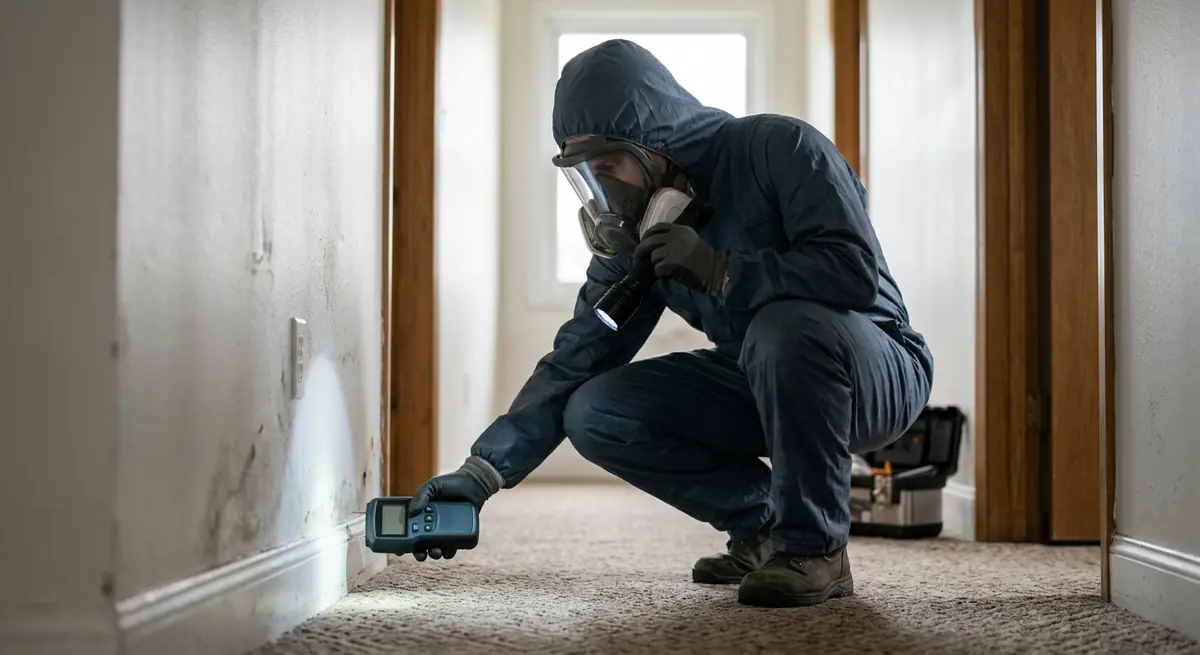
A Miami mold inspector looks at 5 things: the air handler, drip pan and ducts; indoor relative humidity; closets and exterior walls where humid air stalls; bathrooms; and lower walls and floors that took storm or pipe water.
| Area | Checked for | Why it matters in Miami |
|---|---|---|
| Air handler and ducts | Water in the drip pan, drain line flow, growth on coils and supply registers | EPA advises clean drip pans and flowing drain lines, and lists ductwork as a hidden-mold location |
| Living areas and closets | Indoor relative humidity, growth on walls, ceilings and stored items | The Miami Beach station logs about 4,187 cooling degree days a year, and EPA's indoor target is below 60 percent humidity |
| Bathrooms | Ceiling, grout, caulk and the wall behind the tub | EPA advises running the bathroom fan or opening the window when showering |
| Lower walls and floors | Moisture above any waterline, baseboards, carpet pad | Owners in Miami's residential covered ZIP codes have filed 44,004 NFIP flood claims since 1978 |
Readings before any opening
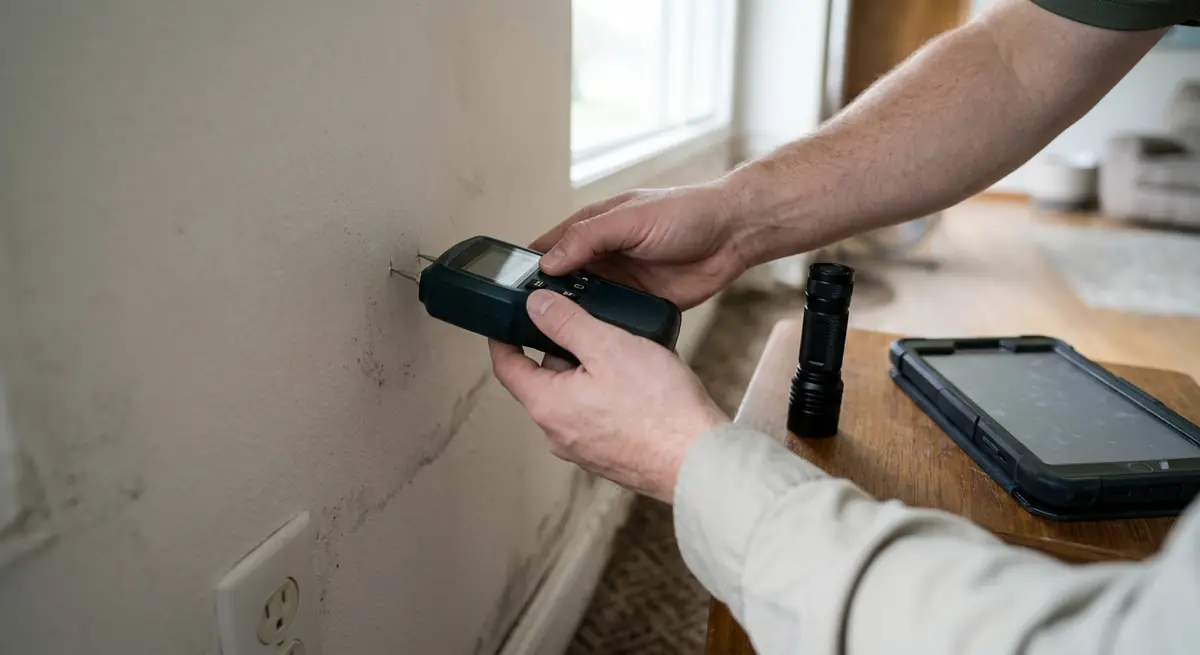
EPA lists moisture meters and humidity gauges as investigation tools. The inspector reads a stained wall across its height and width, compares it with a dry wall in the same room, and opens drywall only where the numbers stay high, so the later repair stays small.
The written findings
Ask for each affected area in square feet, the readings, the source of the water or humidity, and any lab results. In Florida those findings come from the assessor, and the remediation company prices its work from them.
When does mold testing pay off in Miami?
Testing earns its cost in 2 Miami situations. A musty smell from vents or walls with no growth in sight justifies sampling to find hidden mold, and a finished removal job justifies clearance samples. Visible growth is removed without a test.
Lab results that settle nothing
- Species of visible growth: CDC says you do not need to know the type of mold; removal is the same.
- Pass or fail against a limit: EPA has set no federal limits for airborne mold, and CDC notes there is no accepted standard for acceptable levels.
- Health predictions: CDC states that sampling cannot show whether someone will get sick.
Indoor and outdoor comparison
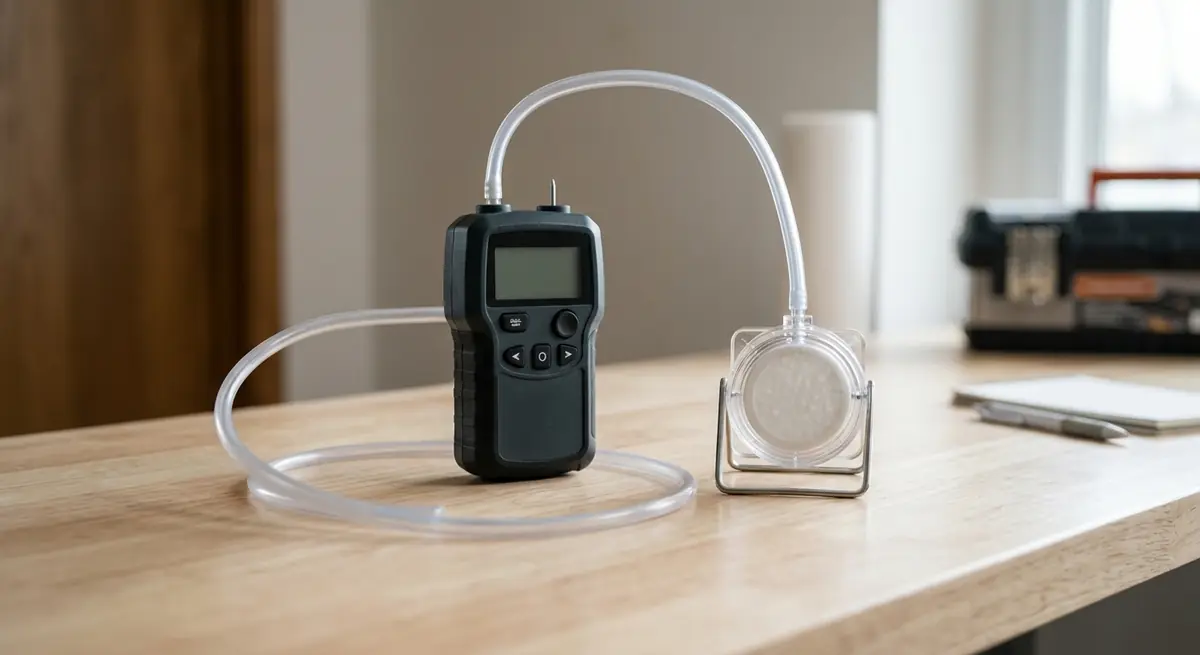
An air sample is read against an outdoor sample taken the same day; EPA's measure of a finished cleanup is indoor mold types and levels similar to the outdoor air. Surface samples by swab or tape lift show what grows on one spot and help confirm that a surface was cleaned. EPA advises that sampling be planned and interpreted by professionals experienced in mold sampling protocols.
Does Florida license mold inspectors?
Yes. Florida licenses mold assessors and mold remediators separately through the Department of Business and Professional Regulation, under Chapter 468, Part XVI, and a company generally cannot both assess and remediate the same structure within 12 months, with limited exceptions.
Florida's license calls the inspector a mold assessor, and Florida Statute 468.8419 sets the 12-month separation between assessing and remediating one structure. For a Miami owner, the assessor documents the problem and a different company removes it, outside the statute's limited exceptions.
Questions for a Miami assessor
- License: the assessor's Florida Department of Business and Professional Regulation (DBPR) license, which you can confirm with the department.
- Laboratory: which lab reads the samples, and whether an outdoor comparison sample is included.
- Independence: confirmation that the assessing company will not perform the removal.
What does a clearance check prove after mold removal in Miami?
A clearance check proves 3 things: the moisture or humidity problem is fixed, no visible mold, damaged material or musty odor remains, and any samples show indoor mold types and levels close to the outdoor air. Rebuilding waits for that result.
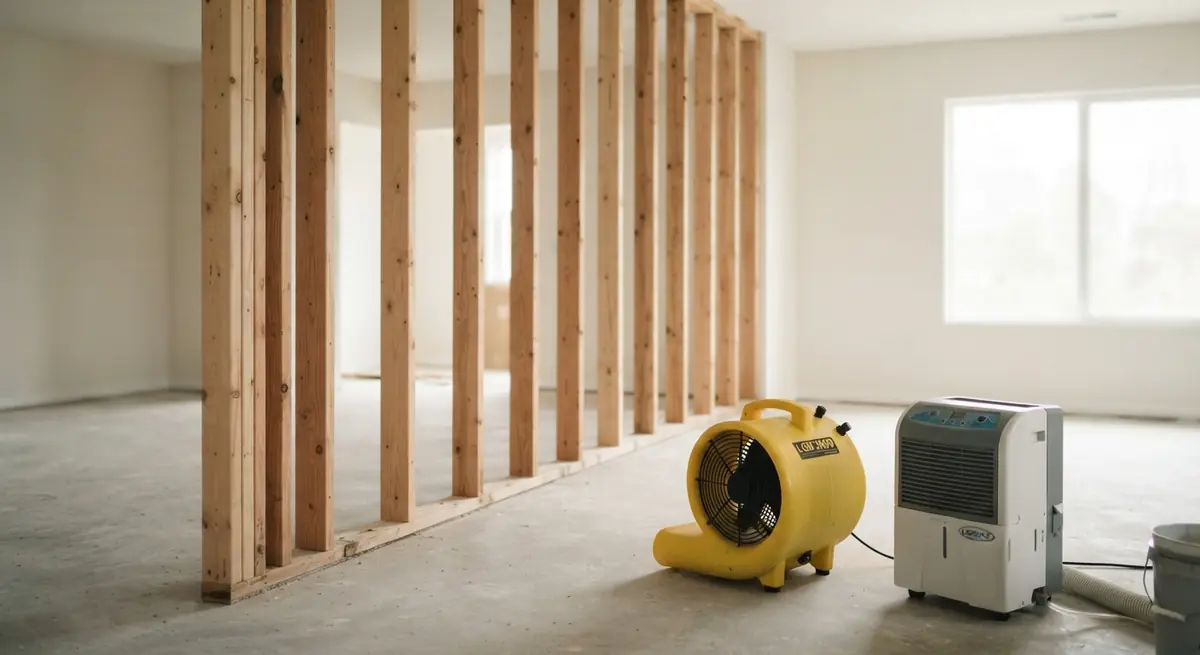
EPA lists those conditions, along with occupants returning without health complaints, as signs that cleanup is complete, and calls the final decision a judgment. In Florida, a remediation company generally does not assess a structure it remediated within 12 months, so the Miami clearance check comes from an independent assessor. Our network makes independent clearance testing available.
Timing the check
Schedule clearance while containment is still standing and before drywall, insulation or flooring returns, so a failed area is cleaned again inside the same barrier. A failed check names the area; the remediator recleans it, and the assessor rechecks that area.
How much does a mold inspection cost in Miami?
The specialist states the Miami inspection price on the call, and only the estimate booked through our network is free. Lab samples and a clearance visit are priced separately, based on the areas checked, duct access and the number of samples.
What moves the sampling and clearance price
- Area count: one closet takes less time to check than every room plus the air handler.
- Duct access: opening the air handler and supply runs adds time.
- Samples: each air or surface sample carries its own laboratory charge, and an air test adds an outdoor comparison sample.
- Clearance: a post-removal check is a separate visit.
Removal is priced on different lines: square footage, containment, tear-out and the humidity or water-source fix. Those lines, with HomeAdvisor's published Miami figures, are on our page about mold removal cost in Miami.
What comes after a Miami mold inspection finds growth?
The findings become the removal scope: square feet per area, containment level, materials to remove or clean, and the humidity, drain-line or water-entry fix. Growth under about 10 square feet falls within homeowner cleanup per EPA; larger areas go to a remediator.
In Florida the remediator holds a separate DBPR license from the assessor, and EPA's containment bands, limited for 10 to 100 square feet and full above 100, set how the work zone is sealed. Remediation steps, Miami humidity and flood data, and the covered ZIP codes are on our page about mold remediation in Miami. One call to (856) 595-8837 books the next step.
Miami mold inspection FAQ
Is a home mold test kit worth buying in Miami?
No. A kit cannot find hidden growth or the water source, and CDC notes there is no accepted standard for an acceptable mold level to compare a result with. A visual inspection with moisture readings answers the questions a kit leaves open.
Can the AC system be checked for mold without taking it apart?
Partly. The inspector checks the drip pan, drain line, supply registers and any accessible coil surface, and reads humidity in the rooms it serves. Opening the air handler or duct runs is added only where those checks point to growth.
Can a Florida mold assessor also remove the mold?
Not on the same structure within 12 months, in general. Florida law separates mold assessment and mold remediation for a given property, with limited exceptions, so the inspecting company and the removal company are normally different businesses.
Why does my Miami closet smell musty when no mold is visible?
A musty closet smell with no visible growth points to hidden mold, which EPA lists as a reason to investigate. In Miami, the back of drywall, the underside of carpet and the space behind stored items are common places to look.
Should I book an inspection after a storm even without visible mold?
Yes, when water stayed in walls, carpet or cabinets longer than 48 hours. EPA notes that growth can occur even when materials dry within 48 hours, and moisture readings show whether wet material is still behind the drywall.
A musty AC, a stained closet or a job that needs clearance in Miami? Call (856) 595-8837. A support manager confirms the time, and the specialist gives the inspection estimate on the call.
Call (856) 595-8837